|
|
|
|
|
|
|
 |
|
 |
|
|
|
|
Our site is 256 bit SSL SECURED. SSL (Secure Socket Layer) is the industry standard for viewing and sending sensitive information
on an internet browser. Click on the SSL image below see our site report.
|

|
|
|
 |
|
 |
|
|
|
|
|
|
|
|
|
|
As of January 1, 2017, DIVING FOR FUN will
NO LONGER be offering training services. However, we wanted to continue to provide
a list of the classes we offered along with course outlines as a reference for all our past customers.
 Course Overview:
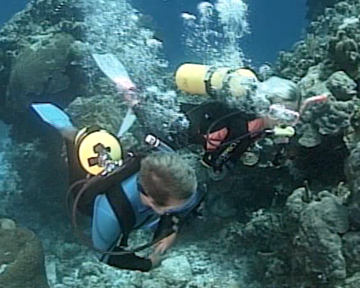
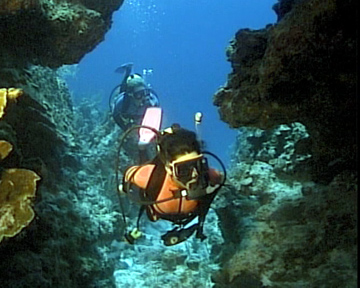
Drift Diving is effortless and relaxing because you simply glide with the current and feel
the rush of flying underwater. But, with this type of diving comes with special procedures that
you need to know so you can maximize your fun underwater. Drift Dives are great fun! Perfect
for trips to Cozumel, Belize, Cayman, Virgin Islands, and the Florida Keys. Course Overview:
Drift Diving is effortless and relaxing because you simply glide with the current and feel
the rush of flying underwater. But, with this type of diving comes with special procedures that
you need to know so you can maximize your fun underwater. Drift Dives are great fun! Perfect
for trips to Cozumel, Belize, Cayman, Virgin Islands, and the Florida Keys.
Prerequisites:
Must be at least 12 years old and certified as a Junior Open Water Diver or an Open Water
Diver or have a qualifying certification from another training organization.
 Course Activities:
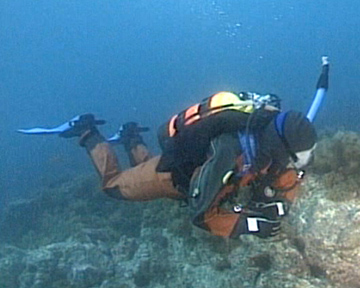
You will learn about planning, organization, procedures, techniques, problems and hazards of
drift diving, special equipment - floats, lines, reels, proper procedures for buoyancy-control,
navigation and communication, site selection and overview of aquatic currents - causes and effects,
and techniques for staying close to a buddy or together as a group. You will put your new knowledge
into action because you will do two dives under the supervision of an instructor. Course Activities:
You will learn about planning, organization, procedures, techniques, problems and hazards of
drift diving, special equipment - floats, lines, reels, proper procedures for buoyancy-control,
navigation and communication, site selection and overview of aquatic currents - causes and effects,
and techniques for staying close to a buddy or together as a group. You will put your new knowledge
into action because you will do two dives under the supervision of an instructor.
- Classroom: There is one classroom session. The classroom session will cover
the chapter on Drift Diving in the Adventures in Diving Manual, review your knowledge review answers
and prepare you for each of the two open water dives.
- Independent Study: Read the chapter on Drift Diving in the Adventures in
Diving Manual and complete the knowledge review located at the end of the chapter. You will need
to turn in the knowledge review prior to certification or provide a copy of an Adventure Log signed by an
appropriate instructor if you have already done dive one in connection with your Adventure Diver or
Advanced Open Water Diver Certification.
- Open Water Dives: The 2 open water dives are done on a dive trip.
 Forms Required:
Students training will need to complete the three (3) forms: Liability Release, Statement of Understanding, and
Medical Statement prior to entering the water. Forms Required:
Students training will need to complete the three (3) forms: Liability Release, Statement of Understanding, and
Medical Statement prior to entering the water.
Materials/Equipment Required:
The Drift Diver Specialty Manual (included in course price). Recommended: Drift Diver Specialty DVD
 Length of Course:
If you have read the Drift Diver Specialty Manual, completed the knowledge review prior to coming to class then the classroom will last less than
1 hour depending upon class size. Length of Course:
If you have read the Drift Diver Specialty Manual, completed the knowledge review prior to coming to class then the classroom will last less than
1 hour depending upon class size.
Related Specialties:
Project AWARE,
Boat Diver,
Coral Reef Conservation,
Deep Diver,
Drift Diver,
Dry Suit Diver,
Enriched Air (Nitrox),
Equipment Specialist,
Fish ID,
Multi-Level Diver,
Night Diver,
Peak Performance Buoyancy,
UW Naturalist,
UW Navigation,
UW Digital Photo,
UW Photo,
UW Search & Recovery,
Wreck Diver.
|
Dive 1:
- Look for bottom hazards (aquatic life and sharp objects) and avoid contact/damage to the living portions of the reef (corals, sponges, etc.).
- Identify the instructor and/or qualified assistants.
- Signal OK to buddy and instructor.
- Monitor buoyancy.
- Monitor depth, time and tank pressure.
Dive 2:
- Look for bottom hazards (aquatic life and sharp objects) and avoid contact/damage to the living portions of the reef (corals, sponges, etc.).
- Identify the instructor and/or qualified assistants.
- Signal OK to buddy and instructor.
- Monitor buoyancy.
- Maintain position on the bottom by swimming into the current holding onto the bottom or hiding behind rock/coral outcrop. Avoid damaging the living reef.
- Using a compass, determine the direction of the current and estimate its relative strength (weak, mild, strong).
- Check depth, note time and tank pressure.
- Execute a safety stop at 15 feet for three minutes.
|
 |
If you need additional information or have questions,
we can be reached at our Contact Us page or visit our
Sign Up page.
|
|
|
|
|
|
|
|
|
|
|
|